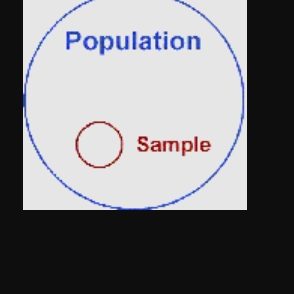
Sampling is the process of examining a smaller size of a total population rather than looking at the whole population. In Social Work this is important because researchers want to help individuals and families that we service have better outcomes and policies, by using a scientific evidence-based process. Researchers can save time and money when analyzing issues and looking at behaviors when conducting sampling research projects. When I look at the smaller sample, I need to make sure it will represent the general population and that any final results can be unbiased.
We can begin this sampling process by selecting a research topic, then developing a framework and research design for your study project. We would want to consider the number of people who will be participating in the study sample. Including and excluding certain characteristics about who will be a part of this sample and who would be unable to participate, helps to set the guidelines for your study. The design of your study can use a qualitiative or quantitative method or a combination of both methods to explain, explore or describe something that you are trying to know about a topic.

Probability or Non-probability sampling methods are two ways that research studies are conducted. You can make the choice about which method is best based on what your goals are for your research and if you want the outcome to be generalized or not generalized to the total population. If you choose the Probability Method, then there are 4 types of samplings methods (Simple Random; Systematic; Stratified and Cluster) that can be used to gain some type of knowledge on a subject. Simple Random picks your samples by chance. Systemic picks your samples by regular intervals like every 5th person is selected for the sample. The illustration above is an example of Stratified Sampling. Stratified is when you make a sub-group and then use a certain characteristics like age or gender to create your sample base. Cluster picks subgroups with similar characteristics and you look at each sub-group to obtain your results. Probability sampling is a way to obtain more valid and accurate outcomes when doing social work research but can be more time-consuming and costly.
Non-probability sampling is a lot easier to use but may not be generalized to the total population when doing social work research. If you choose the Non-probability sampling method, then there are 4 types of sampling methods (Convenience; Snowball; Purposive and Quota) that can be used to gain some type of knowledge on a subject. Convenience looks at people that are readily available to do a research project but doesn’t always represent the total population base. Snowball is when you contact one person to do a research project and then that person refers you to another and so on and so on to obtain research subjects. Purposive is when you choose to people on purpose to be a part of the research. Quota is when you set a certain specific number of people to take part in your research. With non-probability there is a greater risk that your own internal biases will affect the outcome and skew the results to your favor or the desired outcome. This is a less costly and less time-consuming process.
Sampling in Social work can use random or non-random sampling methods when completing research work. The choice again is up to you to determine how to do this work and how your research outcomes can benefit future social workers and the clients/individuals that are in need of assistance. Research projects can help populations that are marginalized and provide for social policy changes that can benefit various social issues that plague the social work commmunity.
 Site Title
Leave a comment